
Understanding Solar ATAP Application and Technical Connection Requirements for Business Owners
Navigating Commercial Solar Energy in Malaysia
As the Malaysian solar landscape continues to evolve, business owners looking to offset their electricity bills must become familiar with the specific processes governed by current initiatives. Understanding the solar atap application and technical connection requirements is the first step toward a successful transition to renewable energy. By transitioning from the previous NEM framework, the Solar ATAP (Solar Accelerated Transition Action Programme) provides a structured pathway for businesses to lower their overheads, provided they meet the necessary compliance standards set by authorities.
For those preparing their property, it is essential to work with a qualified partner who understands the complexities of the regulatory landscape. You can learn more about how we facilitate these transitions as a professional SEDA-certified partner. Navigating the technical aspects requires precise coordination between your internal energy consumption data and the capacity limits mandated by the programme. For many enterprises, the goal is to maximize self-consumption while optimizing the financial benefits of exported energy credits.
Technical Capacity and Connection Standards
Under the current guidelines, the solar atap application and technical connection requirements differ significantly between domestic and commercial applicants. Commercial and industrial entities are permitted to install systems up to 100 percent of their Maximum Demand, capped at a limit of 1,000 kW. This capacity allows businesses with high load profiles to see a substantial impact on their operational expenses.
Before proceeding, your technical team must ensure the proposed system aligns with your building’s electrical infrastructure. A professional feasibility study is critical at this stage to assess whether your current switchgear and distribution boards can support the new solar PV integration without necessitating costly upgrades. This study also helps in identifying potential grid interaction hurdles that could delay your application process.
The Application Process for Businesses
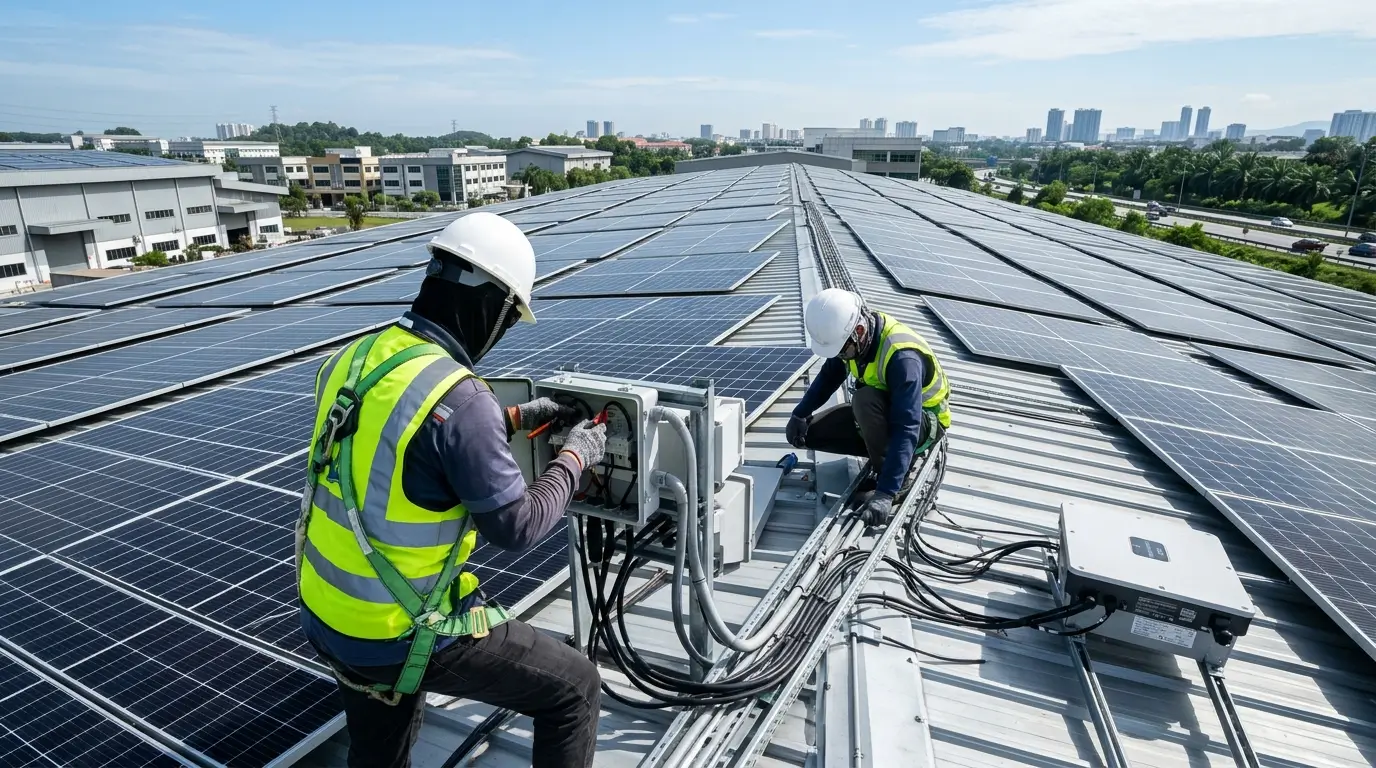
The application for the programme is a process that occurs after the physical installation and commissioning of your system are complete. Because the programme is governed by strict compliance, all work must be performed by a registered PV Service Provider. This ensures that the system meets the high safety standards expected in the Malaysian industry, particularly for high-voltage industrial setups.
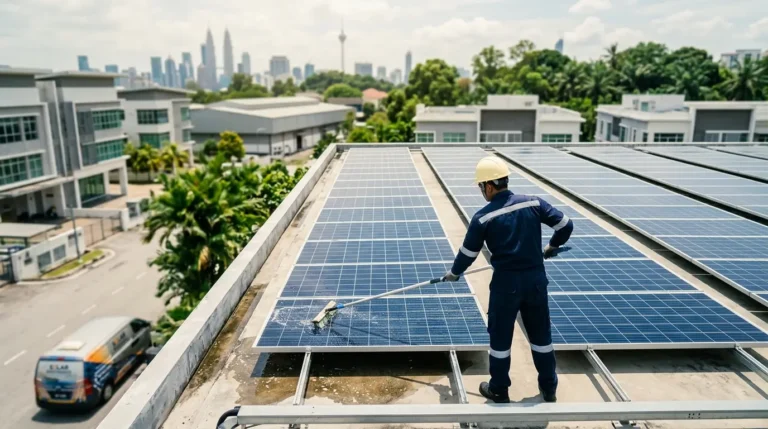
Once the system is commissioned, the application is submitted via the appropriate portals designated by the authorities. Business owners must be prepared to provide detailed technical documentation and energy usage records to ensure the application proceeds without unnecessary delays. For those concerned about long-term system health, consider reviewing our advice on professional maintenance to ensure your asset continues to operate at peak efficiency throughout the 10-year programme period.
| Feature | Requirement Detail |
|---|---|
| Commercial Capacity | Up to 100% of Maximum Demand |
| Max System Limit | 1,000 kW per account |
| Credit Offset | Average SMP, non-transferable |
| Submission Phase | Post-installation and commissioning |
Ensuring Compliance for Long-Term Success
Staying compliant with the solar atap application and technical connection requirements is not just about the initial setup. It involves maintaining a stable connection and adhering to the guidelines regarding energy export. Since exported energy credits in the non-domestic sector are calculated based on the Average SMP, businesses should focus on load shifting to maximize their self-consumption. This strategy often yields a better return on investment than relying solely on exports.
Choosing a reliable contractor ensures that your system design is optimized for your building’s specific energy profile. For businesses weighing their options, understanding the full spectrum of industrial installations is a key differentiator in selecting a partner who can manage both the hardware installation and the regulatory paperwork involved in the programme. Proper oversight during the installation phase prevents technical discrepancies that could complicate your eventual application.
Finally, keep in mind that the current rules for the solar atap application and technical connection requirements are subject to government decisions. Working with an experienced EPCC provider ensures that any updates to the programme are integrated into your project roadmap, keeping your energy investment safe and profitable for the duration of the 10-year programme window.
Explore More
- See our full range of EPCC, feasibility study, ATAP and maintenance services
- Browse our completed solar projects
- Request a free consultation
Frequently Asked Questions
What is the maximum capacity for commercial Solar ATAP applicants?
Commercial and industrial applicants can install a solar PV system up to 100 percent of their Maximum Demand, subject to a total cap of 1,000 kW.
When can a business submit their application for the programme?
Applications are submitted online by a SEDA Registered PV Service Provider after the solar system has been fully installed and successfully commissioned.
Does exported energy credit carry forward to the next month?
No. Under the Solar ATAP programme, exported energy credits only offset the energy charges within the same billing period and do not carry forward or offset AFA charges.
Who is responsible for submitting the Solar ATAP application?
The application must be submitted by a SEDA Registered PV Service Provider (RPVSP) who is authorized to handle the technical and regulatory submission on behalf of the property owner.
Is the programme applicable nationwide in Malaysia?
The Solar ATAP programme, which took effect on 1 January 2026, is currently applicable to Peninsular Malaysia only.
Share on Social Media
More From IPS Insights
Ready to Go Solar ?
Our engineers will help you find the best solution for your needs.
Ready to switch to smarter energy?
Speak to our engineers. We’ll review your site and help you understand the most suitable solar solution for your needs.