
Industrial Solar Panel Malaysia: A Comprehensive Guide for Businesses
Adopting renewable energy has become a strategic priority for modern businesses looking to reduce operational costs and embrace sustainability. By investing in an industrial solar panel Malaysia solution, companies can reduce their reliance on grid electricity by generating solar power for on-site use. As a 100% Bumiputera-owned firm with CIDB G7 registration, IPS Technology provides solar project expertise to help businesses plan their transition to renewable energy, subject to site conditions and project requirements.
The Financial and Operational Benefits for Industry
Malaysia’s climate is well suited to solar power generation. For factories, warehouses, and other commercial facilities, an industrial solar panel system can help reduce electricity bills by supplying power for on-site consumption. The actual savings depend on factors such as electricity usage patterns, system capacity, installation costs, and solar generation performance. A site assessment and financial analysis can help businesses estimate potential savings and payback periods before making an investment.
Eligible non-domestic electricity consumers may also consider the Solar Accelerated Transition Action Programme (Solar ATAP), which allows surplus solar energy to be exported to the grid under the programme’s applicable terms. Export credits and eligibility depend on current guidelines, tariff arrangements, and technical requirements. Businesses should assess these factors alongside their expected on-site energy use when choosing a solar solution.
Understanding the EPCC Process
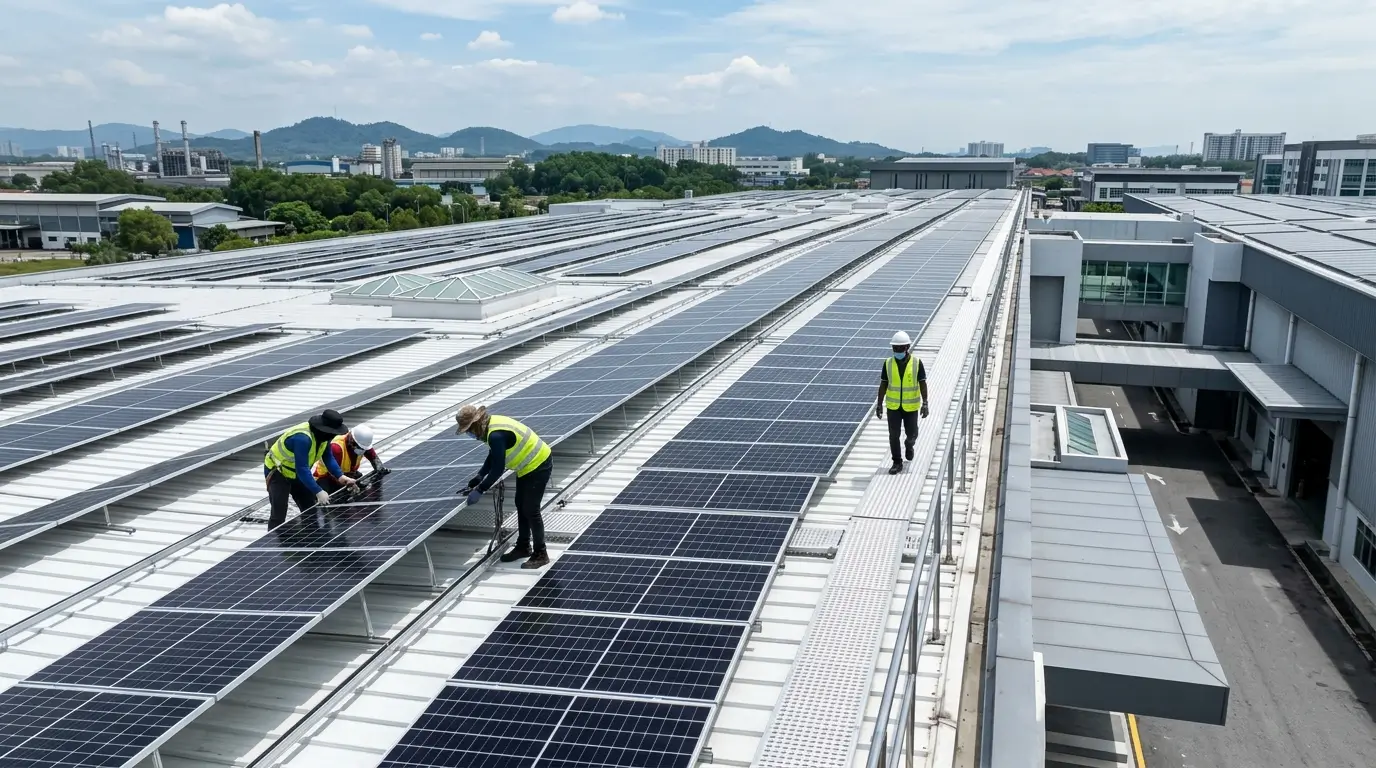
Engineering, Procurement, Construction, and Commissioning (EPCC) is a project delivery model that brings together the key stages of a solar installation. For industrial facilities, careful planning and professional installation are important for safety, reliability, and long-term performance. IPS Technology provides solar project services based on the agreed scope and requirements of each project.
Engineering and Feasibility Studies
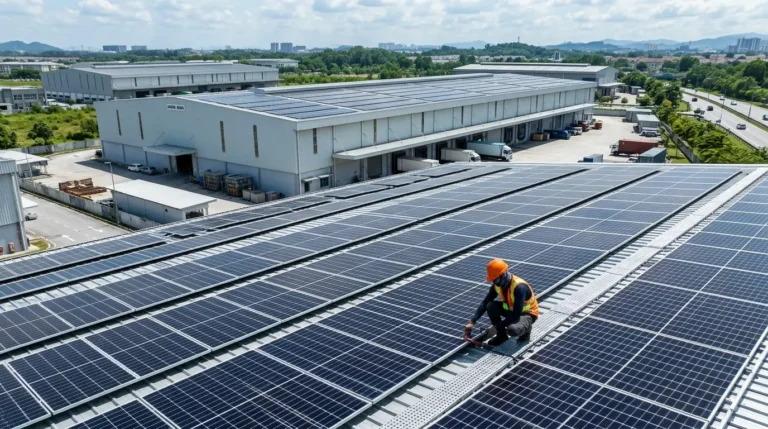
Before equipment is selected, a feasibility assessment can review the site’s roof or available land, electricity consumption profile, and relevant electrical and structural requirements. Historical electricity bills and load patterns help inform the proposed system size. Structural assessments and technical studies may also be required to determine whether the site is suitable for the planned installation.
Procurement and Quality Control
Selecting suitable solar modules, inverters, mounting structures, and other system components is essential to a reliable installation. Equipment should be assessed according to its specifications, warranties, certifications, compatibility, and suitability for the site’s conditions. System design should also account for shading, temperature, weather exposure, and other factors that may affect energy generation.
Construction and Commissioning
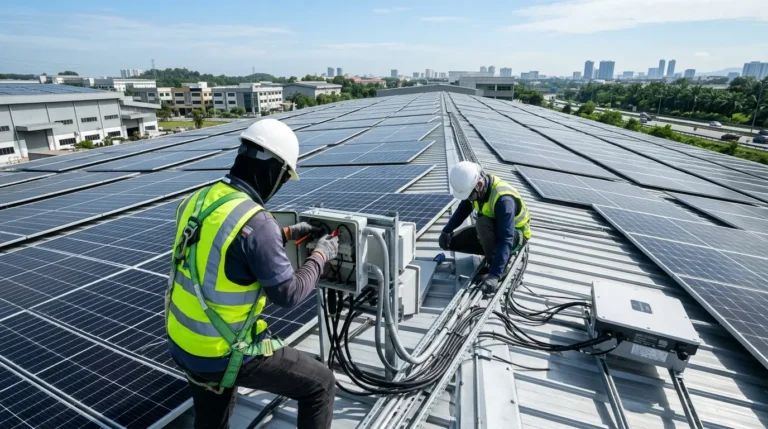
As a CIDB G7-registered contractor, IPS Technology can support construction-related project requirements within its registered scope. Solar installation work should follow applicable safety procedures, technical standards, and regulatory requirements. Before a system is put into operation, testing and commissioning help verify its performance and safe operation. Grid-connected projects must also meet the relevant utility and approval requirements.
Comparison of Solar Deployment Options
The right solar installation depends on your facility’s available space, electricity demand, site conditions, and project objectives. Common deployment options include:
| System Type | Primary Benefit | Ideal For |
|---|---|---|
| Roof-Mount | Uses existing roof space | Factories and warehouses |
| Ground-Mount | Flexible layout and potential scalability | Suitable open land and large facilities |
| Carport Solar | Combines solar generation with covered parking | Commercial parking areas |
Regulatory Compliance and Solar ATAP
Industrial solar projects may involve utility requirements, technical assessments, electrical safety rules, and programme-specific conditions. Solar ATAP allows eligible non-domestic consumers to export surplus solar electricity to the grid, subject to the programme’s applicable terms, capacity limits, and technical requirements. Businesses should review the latest guidelines and assess their eligibility before proceeding with an installation.
IPS Technology can discuss your site’s solar requirements and the relevant considerations for your project. Solar ATAP applications must meet the programme’s requirements, including the applicable Registered PV Service Provider (RPVSP) requirements for submission. The appropriate application and approval process will depend on the project and the latest official guidelines.
Long-Term Maintenance and System Performance
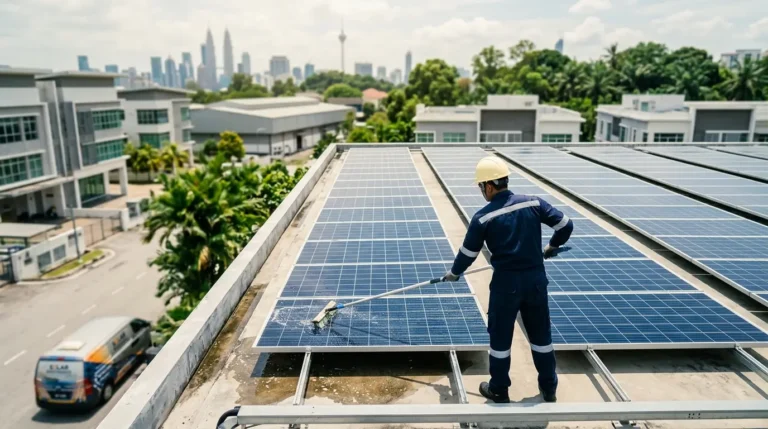
An industrial solar panel system requires appropriate monitoring and maintenance to help sustain its performance. Dust, debris, shading, damaged components, and other site conditions can affect energy output over time. Depending on the system and service scope, maintenance may include visual inspections, performance monitoring, electrical checks, and panel cleaning where necessary.
Solar panels are designed for long-term operation, but actual performance and lifespan depend on product quality, installation, environmental conditions, and maintenance. By planning for ongoing system care and reviewing performance data, businesses can better manage their industrial solar panel Malaysia investment over time.
Explore More
- Explore our EPCC, feasibility study, Solar ATAP-related and maintenance services
- Browse our completed solar projects
- Request a solar project consultation
Frequently Asked Questions
What is the expected lifespan of an industrial solar panel system?
Solar panels are designed to operate for many years, and manufacturers commonly provide performance warranties spanning around 25 years or more. Actual system lifespan and energy output depend on the panels, other components, installation quality, and operating conditions. Check the specific product warranties for the system being considered.
How does Solar ATAP benefit industrial users?
Solar ATAP allows eligible non-domestic consumers to use solar electricity on-site and export surplus energy to the grid under the programme’s applicable terms. The value of exported energy depends on the relevant offset arrangements. Businesses should review the latest guidelines, eligibility criteria, capacity limits, and technical assessment requirements before proceeding.
Why is CIDB G7 registration important for solar projects?
CIDB G7 is the highest contractor grade in the CIDB grading system and allows registered contractors to undertake construction projects without a monetary limit, subject to applicable registration and regulatory requirements. Businesses should also assess the contractor’s relevant experience, project scope, safety practices, and suitability for the proposed solar installation.
What is an EPCC contract?
EPCC stands for Engineering, Procurement, Construction, and Commissioning. It is a project delivery model in which the agreed services can cover design and engineering, equipment procurement, construction, and testing and commissioning. The exact responsibilities depend on the contract and project scope.
Can solar panels generate electricity on rainy days in Malaysia?
Yes. Solar panels can generate electricity from diffused sunlight on cloudy or rainy days, although output is generally lower than under stronger sunlight. Actual generation varies with weather, shading, panel orientation, and system design.
Share on Social Media
More From IPS Insights
Ready to Go Solar ?
Our engineers will help you find the best solution for your needs.
Ready to switch to smarter energy?
Speak to our engineers. We’ll review your site and help you understand the most suitable solar solution for your needs.