Industrial Solar Panel Malaysia: A Comprehensive Guide for Businesses
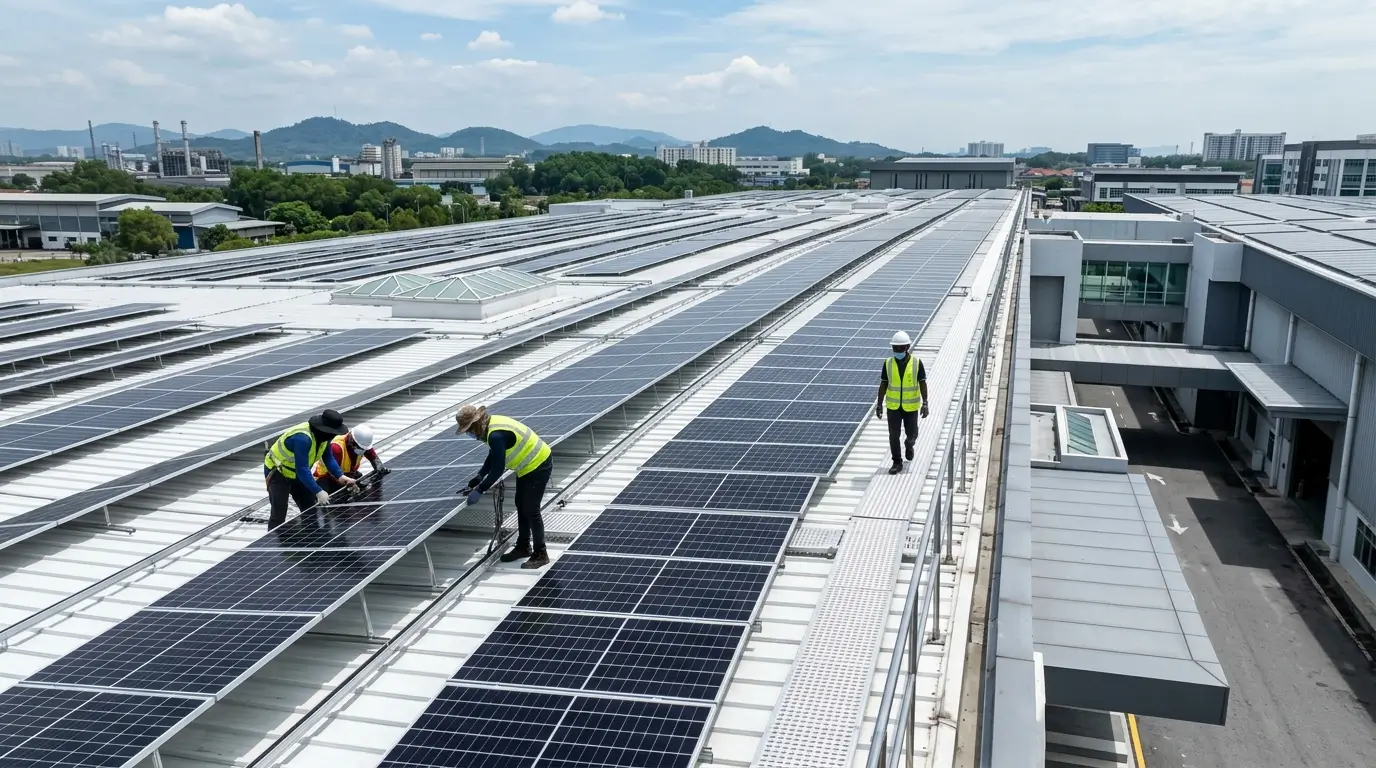
Adopting renewable energy has become a strategic priority for modern businesses looking to reduce operational overhead and embrace sustainability. By investing in an industrial solar panel Malaysia solution, companies can effectively hedge against rising electricity tariffs while demonstrating a clear commitment to environmental stewardship. As a 100% Bumiputera-owned firm with CIDB G7 registration, IPS Technology provides end-to-end expertise to ensure your solar transition is seamless, compliant, and highly profitable.
The Financial and Operational Benefits for Industry
Malaysia’s climate is exceptionally suited for photovoltaic power generation. For large-scale facilities, the primary advantage of installing a high-quality industrial solar panel system lies in the significant reduction of monthly utility bills. With the current NEM 3.0 framework, businesses can offset their consumption by exporting excess solar energy back to the grid. This creates a predictable return on investment that typically pays for the initial system cost within a few years of operation.
Understanding the EPCC Process
Engineering, Procurement, Construction, and Commissioning (EPCC) represents the most reliable delivery model for industrial projects. Because solar systems are long-term assets, professional installation is non-negotiable. At IPS Technology, we manage every phase of the project cycle to ensure safety and system longevity.
Engineering and Feasibility Studies
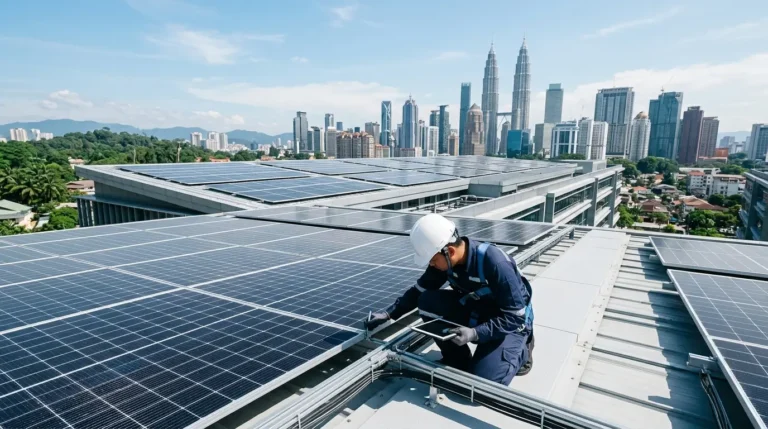
Before any equipment is procured, our engineers conduct thorough site assessments. We analyze your roof structure, energy consumption profiles, and historical grid data. This allows us to design a system that maximizes yield without compromising the structural integrity of your facility.
Procurement and Quality Control
We source Tier-1 solar modules and reliable inverters. Using high-efficiency panels ensures that your facility captures maximum energy even in shaded or overcast conditions. Our procurement process adheres to strict international standards to ensure durability against Malaysia’s tropical weather conditions.
Construction and Commissioning
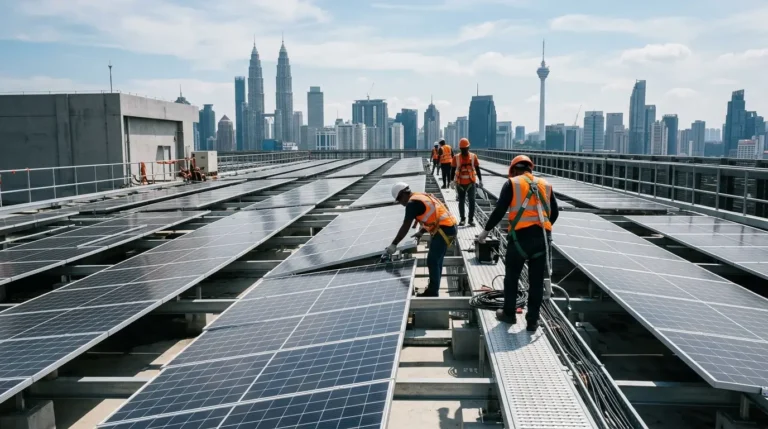
As a CIDB G7-registered contractor, we lead the construction phase with rigorous health and safety protocols. Once the installation is complete, our team manages the commissioning process, ensuring the system integrates flawlessly with the national grid and fulfills all regulatory reporting requirements.
Comparison of Solar Deployment Options
Selecting the right solar solution depends on your facility’s scale and energy goals. The following table provides a quick look at common deployment types:
| System Type | Primary Benefit | Ideal For |
|---|---|---|
| Roof-Mount | Space Efficiency | Factories and Warehouses |
| Ground-Mount | Scalability | Open Land and Large Complexes |
| Carport Solar | Dual Functionality | Commercial Parking Areas |
Regulatory Compliance and Support
Navigating the local energy landscape requires deep knowledge of SEDA guidelines and utility provider protocols. IPS Technology simplifies the administrative burden by assisting with NEM 3.0 applications and ensuring full compliance with national safety codes. Whether you are participating in the ATAP programme or seeking a bespoke commercial installation, our expertise ensures your project stays on track and within budget.
Long-Term Maintenance and System Health
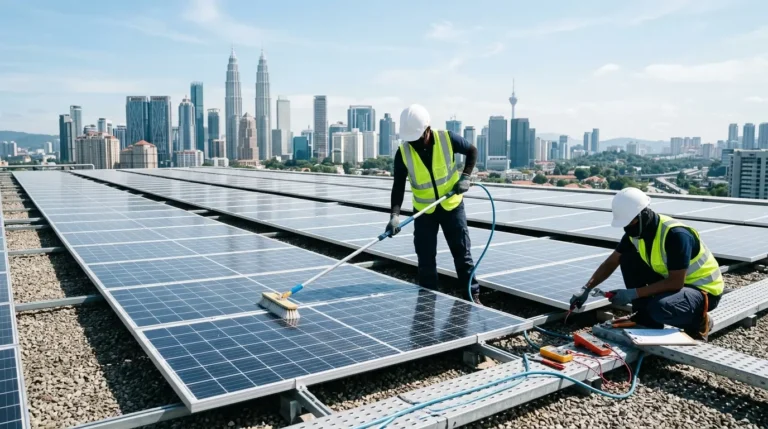
An industrial solar panel system requires routine care to maintain peak performance. Dust, debris, and environmental residue can reduce energy output significantly over time. Our maintenance services include regular inspections, string testing, and cleaning schedules. By choosing an experienced partner for your industrial solar panel Malaysia project, you ensure that your investment continues to deliver maximum energy savings for the next 25 years and beyond.
Explore More
- See our full range of EPCC, feasibility study, ATAP and maintenance services
- Browse our completed solar projects
- Request a free consultation
Frequently Asked Questions
What is the expected lifespan of an industrial solar panel system?
Most high-quality industrial solar panels are designed to operate for 25 to 30 years, often maintaining 80 percent of their initial efficiency by the end of that period.
How does NEM 3.0 benefit industrial users?
NEM 3.0 allows industrial users to export excess solar energy generated by their system back to the grid on a one-to-one offset basis, effectively reducing their electricity costs.
Why is CIDB G7 registration important for solar projects?
CIDB G7 registration indicates that a contractor is qualified to undertake large-scale construction projects of unlimited value, ensuring professional project management and safety compliance.
What is an EPCC contract?
EPCC stands for Engineering, Procurement, Construction, and Commissioning. It is a comprehensive service model where a single contractor manages the entire lifecycle of the solar project.
Can solar panels work during rainy days in Malaysia?
Yes, solar panels continue to generate electricity on cloudy or rainy days by capturing diffused sunlight, although their output is lower than on bright, sunny days.
Share on Social Media
More From IPS Insights
Ready to Go Solar ?
Our engineers will help you find the best solution for your needs.
Ready to switch to smarter energy?
Speak to our engineers. We’ll review your site and help you understand the most suitable solar solution for your needs.