
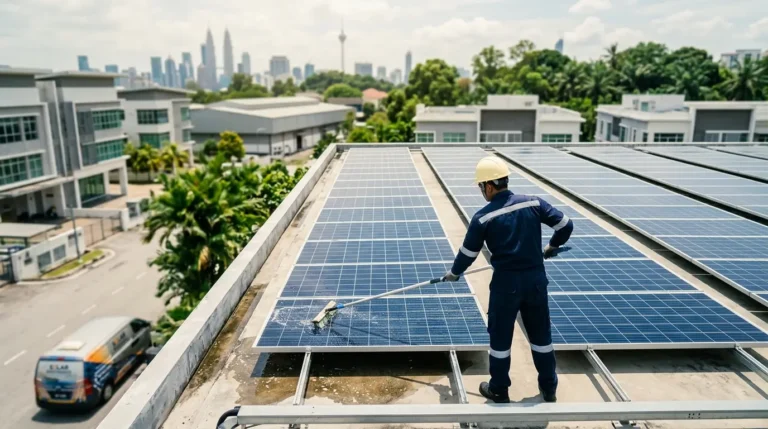
Why You Need a CIDB G7 Solar Contractor Malaysia for Your Energy Project
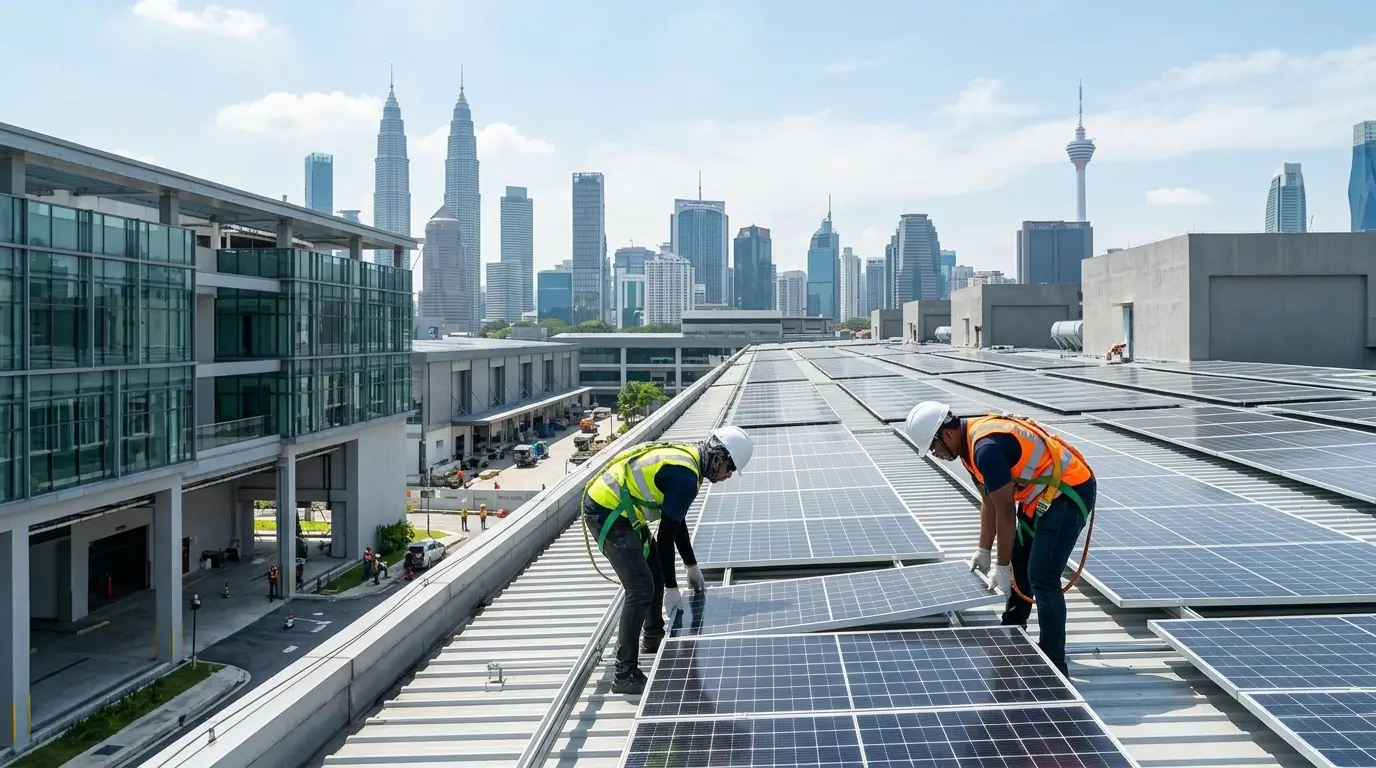
When embarking on a large-scale solar photovoltaic (PV) installation in Malaysia, choosing the right contractor is an important decision for the project’s long-term success. Engaging a CIDB G7 solar contractor Malaysia gives businesses access to a contractor registered at the highest CIDB grade, with no monetary limit on its construction tendering capacity, subject to applicable registration requirements. At IPS Technology, we are a 100% Bumiputera-owned company with CIDB G7 registration, providing solar project services for residential, commercial, and industrial clients based on their project requirements.
What Is a CIDB G7 Contractor?
A CIDB G7 contractor is a company registered with the Construction Industry Development Board (CIDB) at Grade 7, the highest of the seven grades from G1 to G7. G7 contractors can tender for construction projects of any value, while G6 contractors are limited to projects of up to RM10 million.
What a G7 Grade Does Not Tell You
CIDB grading reflects a contractor’s registration and permitted tendering capacity, not its specialist experience. A contractor’s grade alone does not guarantee expertise in every type of solar installation. Businesses should also assess relevant experience, registration details, technical capabilities, safety practices, and the proposed project scope.
Why Professional EPCC Matters
Engineering, Procurement, Construction, and Commissioning (EPCC) covers several stages of a solar project. Solar installation involves more than mounting panels on a roof; it can require structural assessments, electrical system design, equipment selection, installation, testing, and coordination with the relevant utility provider. An experienced CIDB G7 solar contractor Malaysia can help coordinate construction-related activities according to the agreed scope, technical requirements, and applicable regulations.
Comparison of Contractor Grades
Understanding CIDB contractor grades can help businesses assess a contractor’s permitted tendering capacity when planning a solar project.
| Contractor Grade | Tendering Capacity (RM) | General Capacity |
|---|---|---|
| G1 | Up to RM200,000 | Projects within the G1 limit |
| G3 | Up to RM1,000,000 | Projects within the G3 limit |
| G7 | No monetary limit | Projects of varying scales, subject to registration and project requirements |
These grades describe construction tendering capacity, not a contractor’s specific solar qualifications. Always confirm the contractor’s current registration, relevant specialisation, and suitability for the work involved.
Compliance and Solar ATAP Support
Solar projects in Malaysia may involve utility requirements, technical assessments, electrical safety standards, and programme-specific conditions. Solar ATAP allows eligible electricity consumers to export surplus solar electricity to the grid under the programme’s applicable terms. Eligibility, system capacity limits, export arrangements, and technical requirements depend on the consumer category and current programme guidelines.
IPS Technology can discuss your site’s solar requirements and the relevant considerations for your project. Solar ATAP applications must follow the applicable submission process, including the requirement to appoint a Registered PV Service Provider (RPVSP). Businesses should confirm the relevant registration and responsibilities of their appointed service provider before proceeding. Any application support provided will depend on the agreed service scope and applicable requirements.
Safety and Quality Assurance
Safety planning is an important part of solar construction, particularly at industrial sites and operational facilities. Project teams should follow applicable occupational safety and health requirements, site procedures, and electrical safety standards. Before appointing a contractor, businesses should review the proposed safety arrangements, worker competency requirements, risk assessments, and quality-control procedures relevant to the project.
Long-Term Maintenance and Performance
A solar project’s lifecycle extends beyond installation and commissioning. Appropriate maintenance and performance monitoring can help identify issues that may affect energy generation. Depending on the agreed service scope, maintenance may include system inspections, inverter checks, electrical testing, performance reviews, and panel cleaning where necessary. The recommended maintenance schedule depends on the equipment, site conditions, and system requirements.
Choosing a suitable contractor can help businesses manage project coordination, construction quality, and ongoing system requirements. As a CIDB G7 solar contractor Malaysia, IPS Technology offers solar-related services that can include feasibility studies, project implementation, and maintenance, according to the agreed scope. Whether you represent a government agency, a commercial business, or a residential property owner, discuss your project requirements with our team to identify a suitable solar solution.
Explore More
- See our full range of EPCC, feasibility study, Solar ATAP-related and maintenance services
- Browse our completed solar projects
- Request a solar project consultation
Frequently Asked Questions
What is a CIDB G7 registration?
CIDB G7 is the highest grade in Malaysia’s contractor registration system. It has no monetary limit on construction tendering capacity, subject to applicable registration requirements. Businesses should check the contractor’s current registration and relevant scope before appointing them.
Why is it important to choose a G7 contractor for solar projects?
A G7 registration indicates that a contractor has the registration grade to tender for construction projects without a monetary limit. However, the grade alone does not guarantee solar-specific expertise. Businesses should also assess the contractor’s relevant experience, technical capability, safety practices, and suitability for the proposed project.
Can IPS Technology help with Solar ATAP requirements?
IPS Technology can discuss your solar project requirements and the relevant considerations for Solar ATAP. Applications must meet the programme’s current eligibility, technical, and submission requirements, including the applicable Registered PV Service Provider (RPVSP) requirement. Confirm the available application support and service scope with IPS Technology before proceeding.
Can a G7 contractor work on residential solar projects?
A G7 contractor’s grade does not restrict it to large projects alone. Whether the contractor is suitable for a residential, commercial, or industrial solar installation depends on its relevant registration, technical capabilities, experience, and the requirements of the specific project.
What is the role of an EPCC contractor in solar energy?
An EPCC contractor may coordinate the main stages of a solar project: Engineering design, Procurement of equipment, Construction of the installation, and Commissioning and testing. The exact responsibilities depend on the contract, project scope, and applicable regulatory requirements.
Share on Social Media
More From IPS Insights
Ready to Go Solar ?
Our engineers will help you find the best solution for your needs.
Ready to switch to smarter energy?
Speak to our engineers. We’ll review your site and help you understand the most suitable solar solution for your needs.